Local SEO That Helps Customers Find and Choose Your Business
Improve the complete local-search journey—from map listing and service pages to calls, enquiries, reviews, and measurement that reflects real demand.
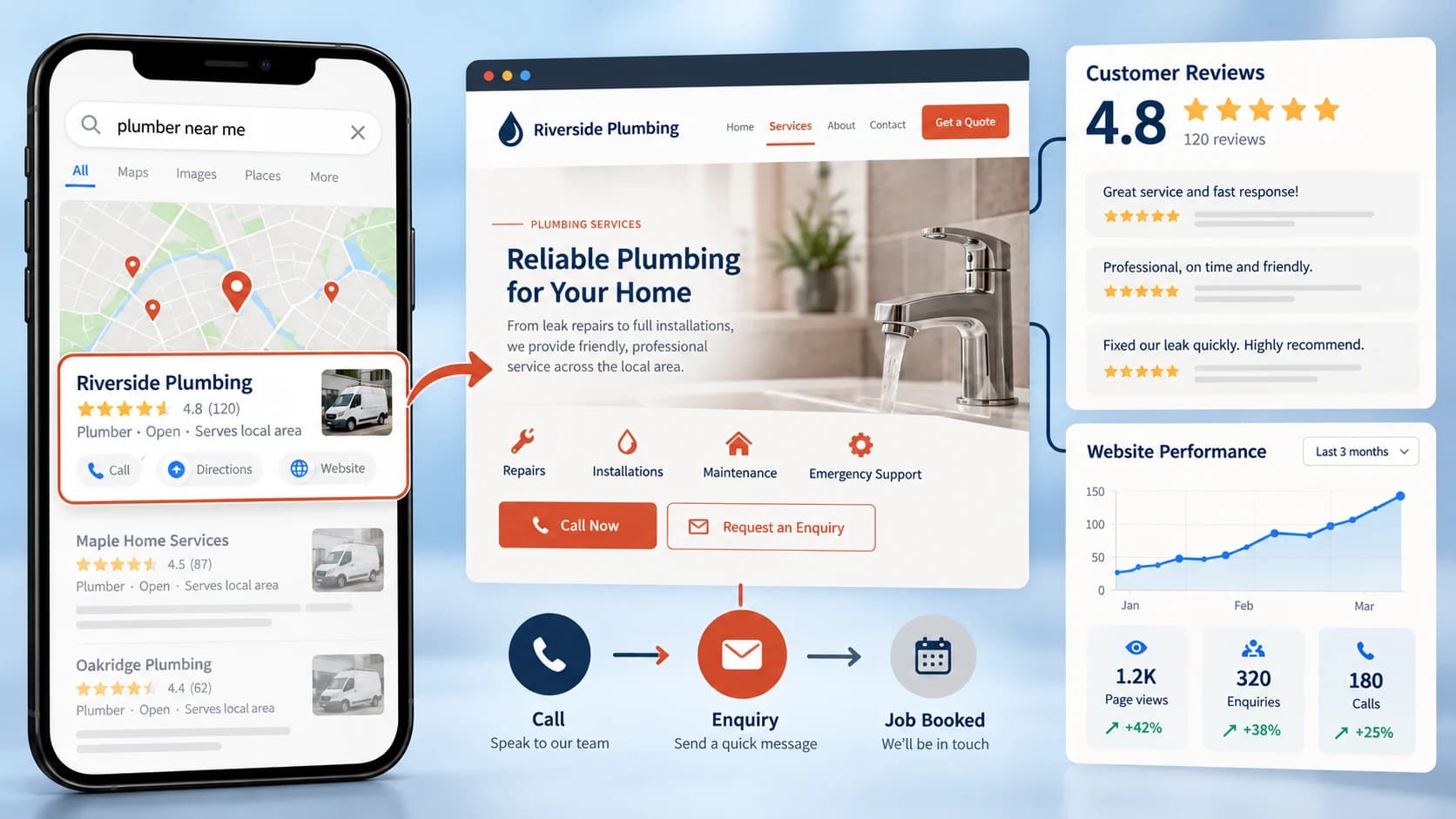
Local SEO is often described as a race to rank first. For a local business, the more useful goal is to appear for the right searches and make it easy for a nearby customer to decide whether to call, visit, or enquire.
That journey usually includes a map listing, the website, reviews, and the experience after someone makes contact. Improving only one part can increase visibility without producing better enquiries.
Establish What a Useful Enquiry Looks Like
Before changing pages or listings, define the work the business wants more of. Record the priority services, genuine service area, opening hours, common customer questions, and jobs the team does not provide.
Then establish a modest baseline for a typical month:
- calls and forms from organic search
- enquiries within the service area
- enquiries for a relevant service
- appointments or jobs booked
- the search terms and pages that contributed
Traffic is useful diagnostic information, but a thousand visits from people the business cannot serve are less valuable than ten suitable local enquiries.
Make the Business Details Dependable
Customers and search platforms should see the same core information wherever the business appears. Check the business name, primary category, address or service area, phone number, opening hours, website address, and holiday changes.
Complete the main business profile with accurate services, useful photos, and a description that says what the business does and where it operates. Avoid adding categories or towns simply to reach more searches. Inaccurate coverage creates frustrated callers and weakens trust.
Build Pages Around Real Services
A strong service page should help a customer answer practical questions:
- Is this the service I need?
- Does the business cover my area?
- What is included, and what is not?
- What should I expect after I enquire?
- What evidence shows the business can do the work?
Use the language customers use when they call. Include relevant examples, qualifications, process details, and clear contact options. A heating company may need separate pages for boiler repair, annual servicing, and replacement because the customer needs and booking journeys differ.
Avoid creating dozens of near-identical town pages with only the place name changed. A location page is worthwhile when it contains genuinely useful local information, such as coverage boundaries, travel limitations, local project examples, or location-specific availability.
Remove Technical Friction
Technical work supports the customer journey. On mobile, check that important pages load promptly, the text is readable, buttons are easy to use, and phone numbers work as links. Ensure each page has a descriptive title, one clear main heading, useful internal links, and an indexable version search engines can access.
Compress oversized images, remove broken links, and consolidate duplicate or outdated pages. Structured business information can help platforms understand the page, but markup cannot compensate for thin content or inaccurate details.
Treat Reviews as Operations, Not a Campaign
Ask for a review after a completed job or successful visit, using the same simple process each time. Do not offer incentives or pressure customers to leave only positive feedback. Respond professionally and avoid including private details.
Reviews help prospective customers understand reliability, communication, and the type of work performed. A steady flow of genuine reviews is more believable than a sudden burst followed by silence.
Measure the Entire Search Journey
Use call tracking carefully, keep the main business number consistent where required, and tag website forms with their source. Review performance monthly, not every morning. Local search changes with seasonality, demand, competition, and the business's own availability.
A useful report connects:
- relevant search visibility
- visits to service and location pages
- calls, forms, or direction requests
- qualified enquiries
- booked work, where the business can record it reliably
This makes it easier to distinguish a visibility problem from a website problem or a follow-up problem.
A Practical First 90 Days
In the first month, correct business information, establish tracking, and fix serious mobile or indexing problems. In the second, improve the highest-priority service pages and remove duplicate content. In the third, establish a review routine, add useful local proof, and compare qualified enquiries with the baseline.
Local SEO does not require pretending to serve every town or publishing content for its own sake. It works best when the online information accurately reflects the business customers will encounter: clear services, a real coverage area, credible evidence, and an easy next step.
Altus Media Labs