How to Build a Useful Brand System When AI Can Make a Logo in Seconds
A practical guide to creating a consistent local-business identity that works across signs, packaging, websites, and everyday customer communication.
AI tools can produce dozens of logos, color palettes, and taglines in minutes. That can make the beginning of a branding project faster, but it does not answer the question that matters: what should customers consistently understand about this business?
For a local business, a useful brand is not a large strategy document. It is a small, practical system that helps the storefront, website, quotation, social post, and customer email feel as though they come from the same business.
Begin with the Decision a Customer Is Making
A customer is rarely choosing the most artistically interesting logo. They are trying to decide whether the business is relevant, trustworthy, and suitable for their situation.
Start by writing down four things in plain language:
- who the business is best placed to help
- what problem it solves particularly well
- what customers should expect from the experience
- what evidence supports that promise
A neighborhood electrician might want to be known for clear arrival windows and careful work in occupied homes. A family food producer might be known for small batches and straightforward ingredients. These are more useful design inputs than broad words such as “quality,” “innovation,” or “excellence.”
Build Recognition from Repeated Elements
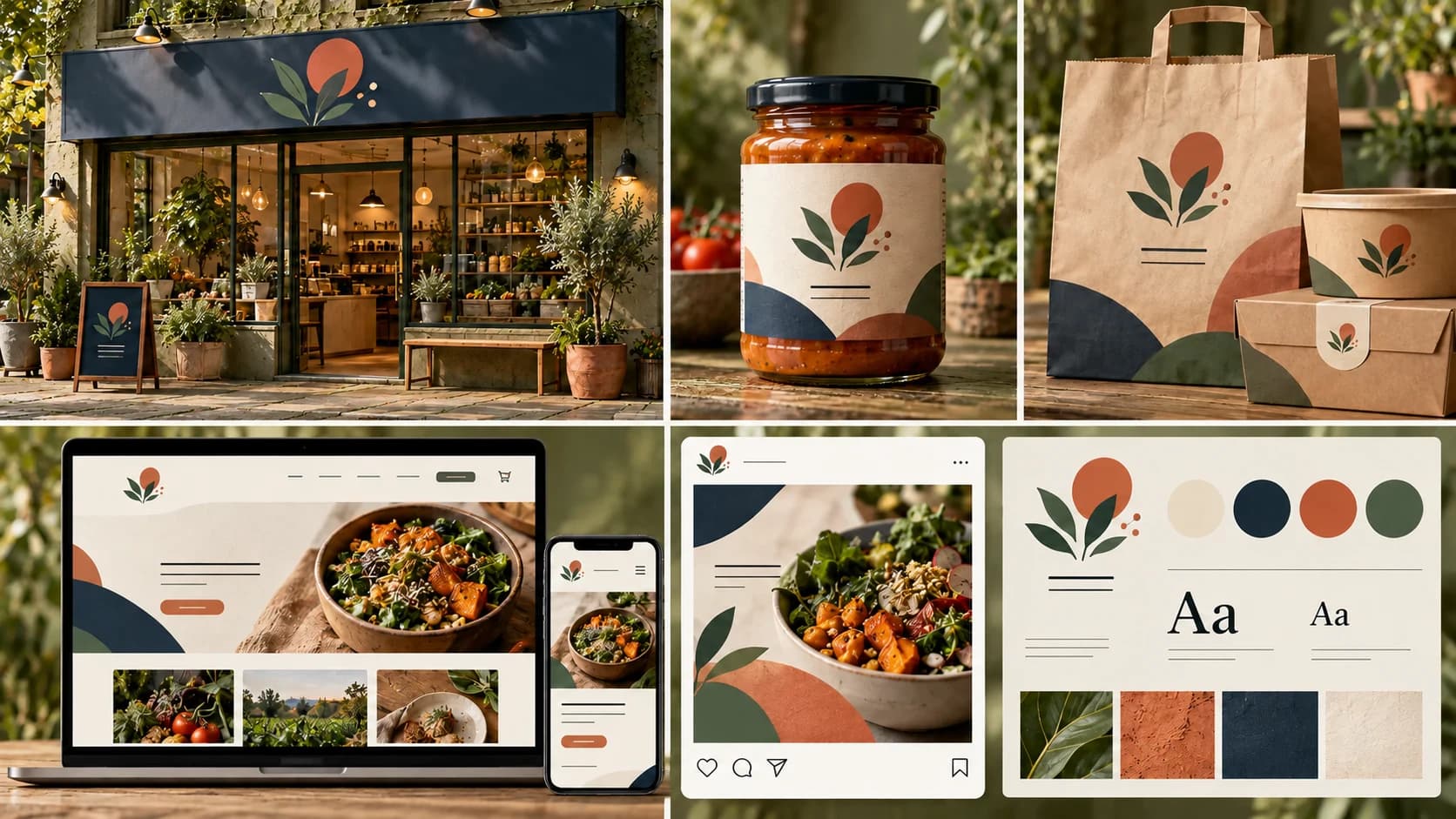
Recognition grows when the same few elements appear consistently. Most small businesses need a manageable foundation:
- a primary logo and a simpler mark for small spaces
- a limited color palette with accessible contrast
- one display typeface and one highly readable text typeface
- a clear photography or illustration approach
- a consistent tone for headings, calls to action, and customer messages
The goal is not to make every item identical. The goal is to make different items feel related. A seasonal label can use a different product color while keeping the same name position, type hierarchy, and information structure.
Test the System on Real Applications
A logo shown on a blank presentation page proves very little. Test the identity where customers will actually encounter it:
- a mobile website header
- a storefront sign or vehicle graphic
- a quotation, menu, or price list
- a social post and profile image
- packaging or a printed handout, when relevant
These applications reveal practical problems early. A detailed mark may become unclear at profile-image size. A pale color may fail on a sunny shop window. A typeface may look attractive in a headline but become difficult to read in a service description.
Give Information a Consistent Hierarchy
Brand consistency is also information consistency. Decide what customers need to notice first, second, and third.
On a product label, that could be the producer, product name, flavor, and then required details. On a service page, it could be the service, service area, reason to trust the business, and then the enquiry action. Repeating this hierarchy makes materials easier to scan and easier for the team to create.
Templates are valuable here. A small set of well-designed templates for social posts, proposals, signage, and email headers usually provides more day-to-day value than a large collection of decorative assets.
Use AI as an Assistant, Not the Source of Truth
AI can help explore visual directions, organize interview notes, generate rough copy options, or adapt an approved layout to a new format. Its output still needs review for accuracy, originality, accessibility, and fit with the business.
Do not upload confidential customer information or protected brand assets to a tool without understanding its data terms. Check generated names and symbols for unwanted similarities. Most importantly, do not let the speed of generating options replace the work of choosing a clear position.
Create a Short Guide People Will Use
A compact brand guide can be enough if it answers everyday questions. Include the approved logo versions, color values, type rules, image examples, tone of voice, and a few correct and incorrect applications. Add editable templates and name one person responsible for approving exceptions.
The guide should help a new staff member make a reasonable flyer or social post without guessing. If it only makes sense to the designer who created it, the system is not finished.
Review the Brand Against Business Outcomes
Branding is harder to isolate than an advertising campaign, but it can still be evaluated. Look for fewer inconsistent materials, faster content production, better recognition among returning customers, fewer basic clarification questions, and improved conversion on customer-facing pages.
A strong local brand does not need to look like a national company. It needs to be recognizable, believable, and easy to use. AI can speed up production, but the useful part of branding remains the same: making clear choices and applying them consistently wherever customers meet the business.
Altus Media Labs