Making Paid Search Work Harder for a Two-Location Dental Practice
- Client
- Oak & River Dental
- Expertise
- Paid Marketing / Web Development
- Timeline
- 10 weeks + 3 months optimization
Where we started.
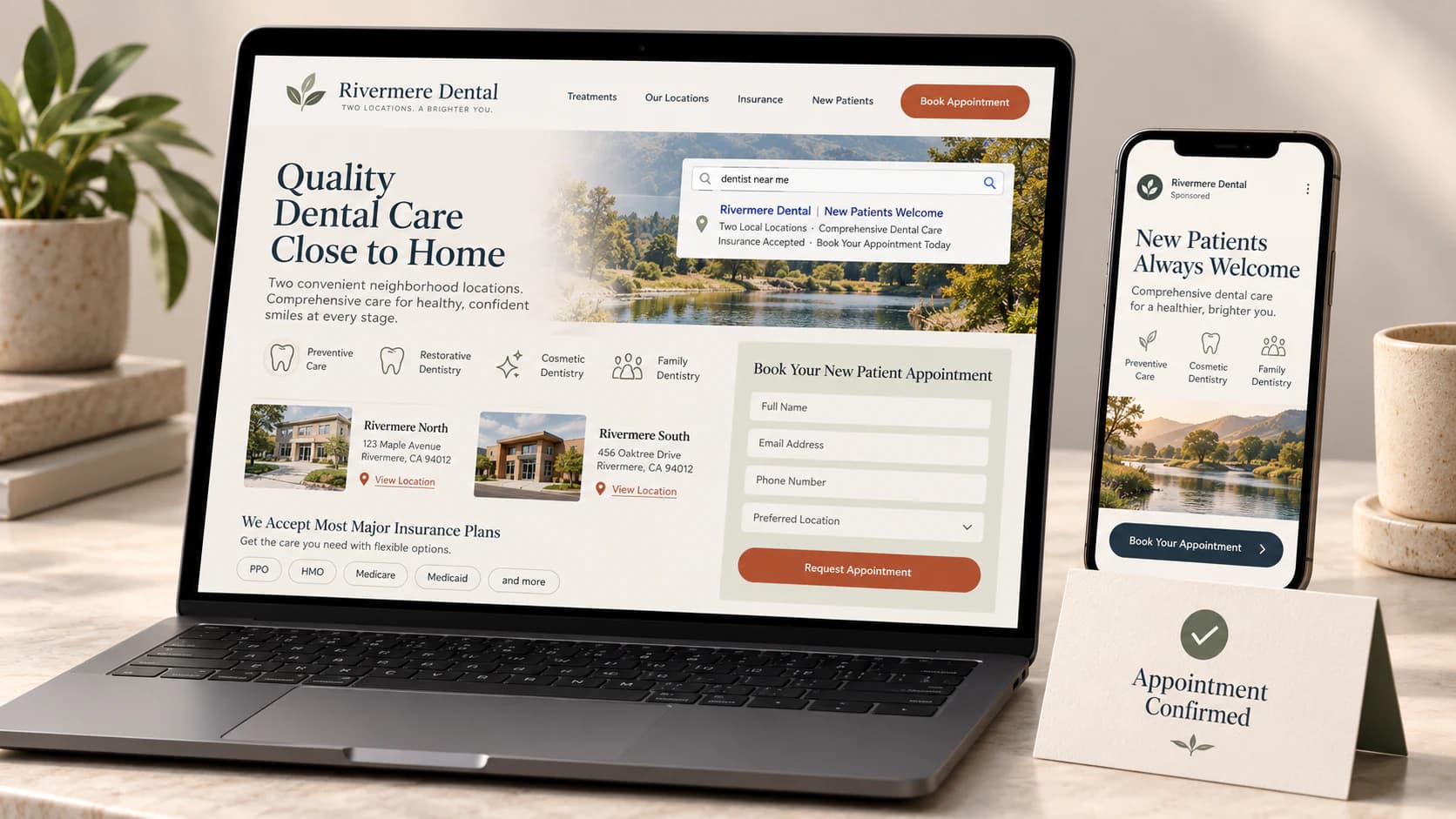
A two-location general dental practice was spending about $6,500 a month on search and social ads but could not reliably connect leads to attended appointments. Campaigns sent every service to the homepage, calls were not tracked, and reception staff spent time responding to enquiries for treatments or insurance plans the practice did not provide. The owners wanted more suitable new-patient enquiries without materially increasing the monthly budget.
A focused response.
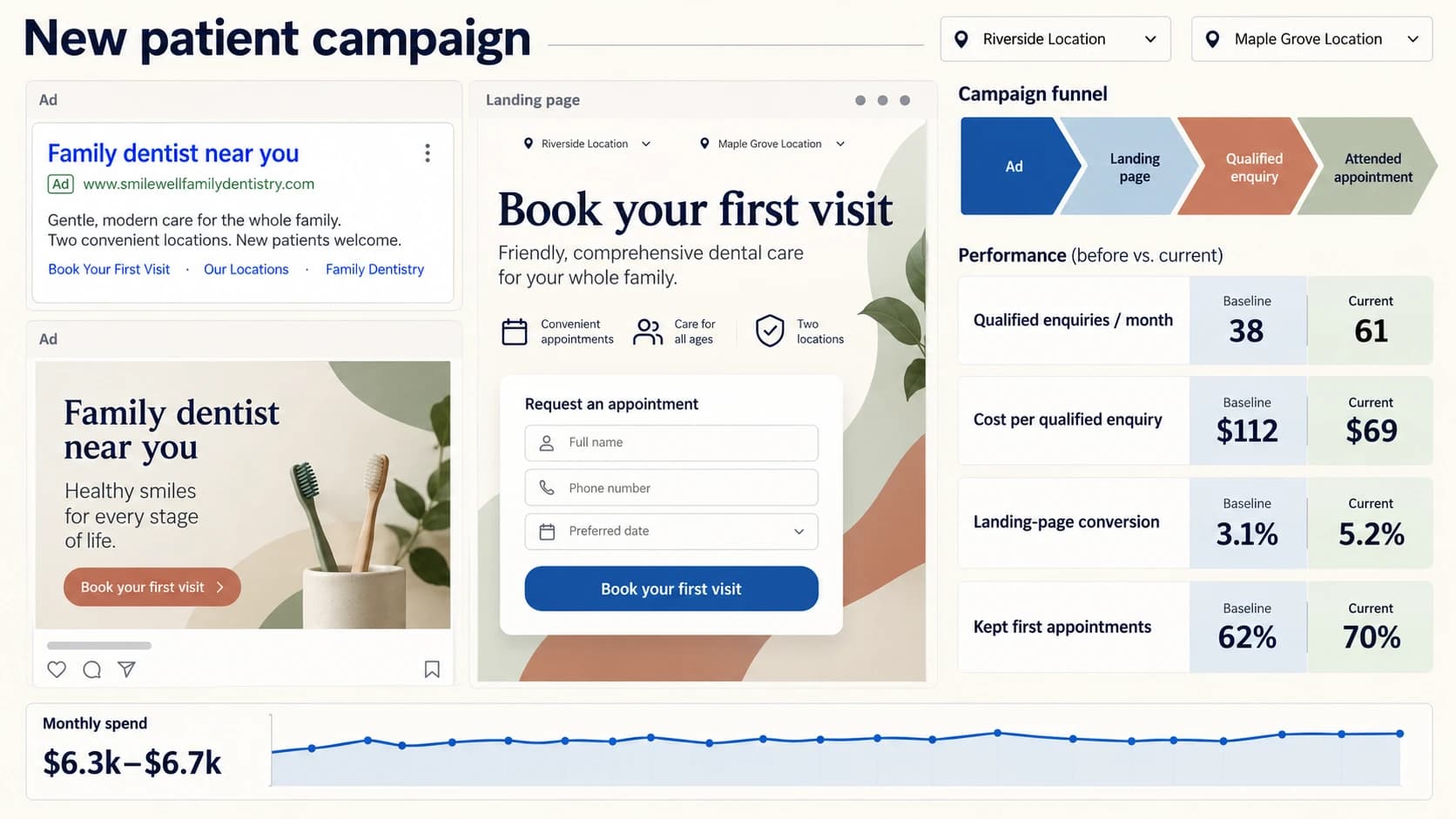
We first connected call, form, and appointment-source tracking so the practice could distinguish an enquiry from a kept appointment. Search campaigns were reorganized by location and treatment, irrelevant queries were excluded, and budgets were shifted toward services with available chair time. We created three focused landing pages, clarified insurance and location information, shortened the enquiry form, and worked with reception staff on a consistent callback and reminder process.
What changed.
How it came together.
Separating Leads from Useful Enquiries
The ad platforms reported more than 90 monthly conversions, but many were page views, repeat calls, or forms from outside the service area. Reception records showed an average of 38 genuinely suitable enquiries and no consistent view of how many attended. We rebuilt conversion tracking around calls longer than 45 seconds, completed treatment forms, and booked appointments. This lowered the headline conversion count but gave the team a number it could make decisions from.
Matching the Campaign to Available Care
Campaigns were divided by location and treatment so budget could follow actual appointment availability. Broad informational queries, unsupported insurance searches, and distant areas were excluded. Each landing page answered the questions reception heard most often: who the treatment was suitable for, what the first visit involved, where the clinic was, and how payment worked. The form was reduced to five fields, with a phone option for people who preferred to speak to the team.
Better Results Without a Large Budget Increase
Across the following three months, monthly spend stayed between $6,300 and $6,700. Qualified enquiries increased from 38 to 61 and their average cost fell from $112 to $69. Landing-page conversion reached 5.2%. The kept-appointment rate also improved from 62% to 70% after the practice introduced same-day callbacks and clearer reminders. Advertising was not the only cause of that final improvement, so campaign and reception changes are reported separately rather than assigning all credit to media buying.
Ready to build your next chapter?
Let’s turn a thoughtful strategy into something that moves your business forward.